

- 79 Views
- 3 Min Read
- (0) Comment
Standing tall at an altitude of around 6,638 meters (21,778 feet), Mount Kailash is more than just a mountain, it is a symbol of faith.
Known as the abode of Lord Shiva, it continues to attract thousands of devotees and spiritual seekers every year through the Kailash Mansarovar Yatra.
The mountain holds religious meaning for Hindus, Buddhists, Jains, and followers of the Bon faith.
Everyone who visits Kailash Parvat dreams of witnessing its four faces : North, South, East, and West. Each side has a unique spiritual story and meaning. These faces are believed to represent the four directions of the universe which connect heaven and earth.
The South Face of Mount Kailash
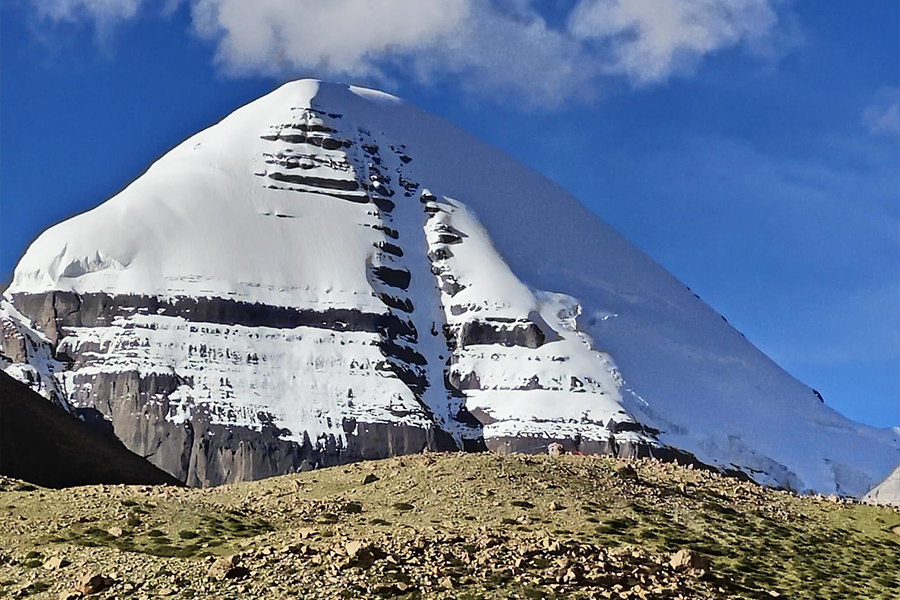
The South Face of Mount Kailash is the first to greet pilgrims as they begin their Kailash Yatra from Yam Dwar. With its perfectly vertical lines and a shining appearance under the sun, this face is said to resemble the spine of Lord Shiva. Devotees believe that this symbolizes the flow of spiritual energy which is the channel that connects mortal life to consciousness.
During the Mansarovar Parikrama, as the sunlight changes, the southern slope seems to glow like gold, a sight that leaves pilgrims speechless.
The melting snow along its ridges forms streams that lead towards Atmalingam
Many travelers describe the South Face as the “living form of Shiva,” as if the mountain itself breathes with energy.
The North Face of Mount Kailash
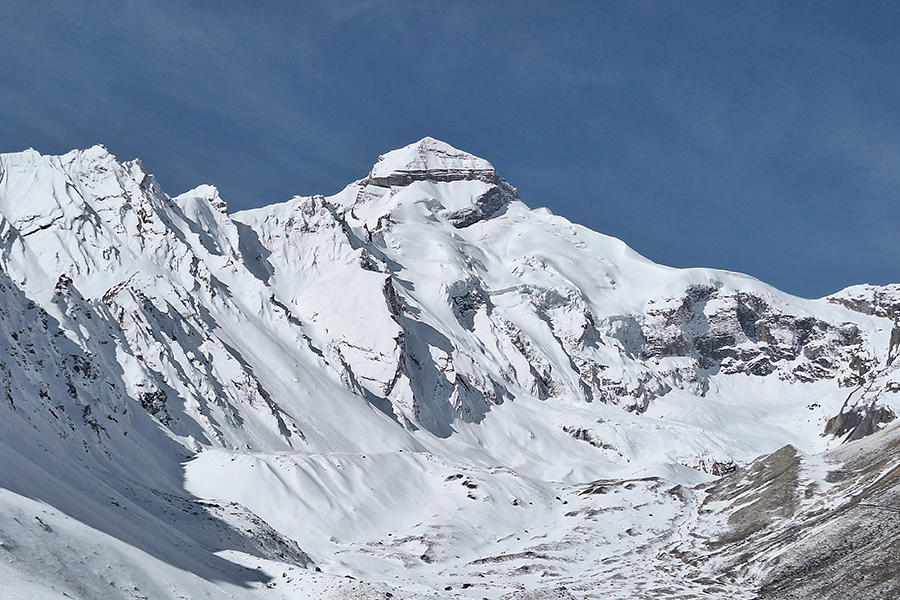
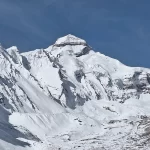
The North Face is perhaps the most powerful side of Kailash Parvat. It becomes visible during the trek to Dirapuk Monastery, one of the main halting points of the Kailash Mansarovar Yatra. From here, the mountain stands directly in front of you which is massive.
This face is known for its glacial beauty, and when the sunlight touches it, it glows with a golden hue, often referred to as the “Golden Kailash.”
Pilgrims perform Charan Sparsh (touching the feet of Kailash) here experiencing a sense of connection that words can’t describe. It is said that meditating before the North Face purifies one’s karma.
As one devotee once said, “In front of the North Face, silence feels like prayer.”
The East Face of Mount Kailash
The East Face becomes visible during the Inner Kora, a more challenging and intense trek. This part of the journey covers sites like Atmalingam, Nandi Parvat, and the Saptrishi Caves.
From the Dolma La Pass (5,630 meters), the highest point of the trek, one can witness the East Face glowing under the early rays of the sun.
This side represents creation and renewal, as it faces the rising sun which is the symbol of new beginnings. Pilgrims who make it this far often describe the experience as walking through the gateway of rebirth.
The East Face also has a connection to Gauri Kund. It is said that Parvati herself bathed here before her union with Lord Shiva.
The West Face of Mount Kailash
The West Face is the first visible side when the Kailash Parikrama begins from Yam Dwar. Its flat and broad surface is said to resemble the face of Lord Shiva himself. Some pilgrims even claim to see eyes and lips formed naturally on the rock, giving it a human-like appearance.
This face is associated with completion and transformation. It reminds devotees that every journey, no matter how long or difficult, finds peace in surrender.
As you walk past the West Face, the East begins to emerge, marking the cycle of life, death, and rebirth that Shiva at Kailash represents.
Despite several expeditions over the years, no one has ever climbed Mount Kailash, as it is considered forbidden in all religions that revere it.
Scientists and mountaineers have often described magnetic anomalies and compass disturbances around Kailash Parvat. Locals say that time itself moves differently here, a reminder that this sacred peak belongs not to the physical world but to the spiritual one.
“You don’t climb Mount Kailash; you surrender to it.”
Each face tells a story of creation, preservation, and transformation. For those who undertake the Kailash Mansarovar Yatra, the journey is not about reaching the summit but about realizing the mountain within, the eternal presence of Shiva at Kailash.


 WhatsApp
 Enquiry
 Call
Call
Leave a comment: